
Cameron Scalera
I am a PhD student in Sustainable Development in the School of International and Public Affairs (SIPA) at Columbia University in New York. I am also a Special Sworn Status (SSS) researcher with the U.S. Census Bureau, a graduate student researcher with the Environmental Inequality Lab, and a visiting research associate at the RFF-CMCC European Institute on Economics and the Environment.
I conduct empirical research in environmental and energy economics. I have projects related to workplace extreme heat, waste pollution, and electricity markets. Prior to the PhD, I worked for two years at the Center for Economic Studies (CES) within the U.S. Census Bureau. There, I collaborated with the Environmental Inequality Lab to build a microdata infrastructure for studying the socioeconomic distribution of environmental exposure, such as to extreme heat and wildfire smoke. I earned a BA in Economics and French from the University of Virginia.
Research
Working Papers
“Large-Load Electricity Customers and Spillovers on Household Prices: Evidence from U.S. Data Centers,” with Valentina Bosetti and Filippo Pecci; CEPR Discussion Paper DP2185, 2026
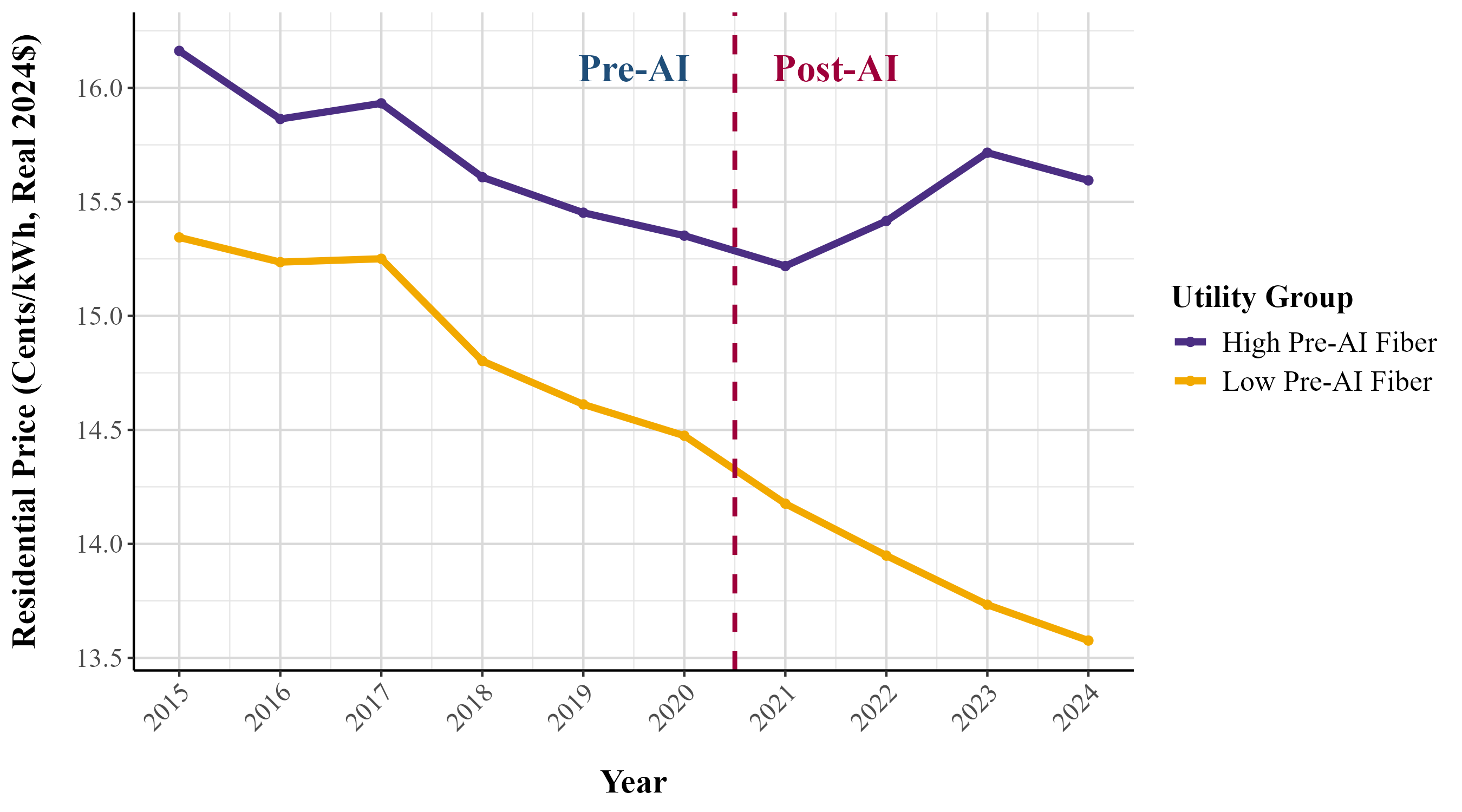
We study how large-load customers affect household electricity prices. We map the AI-associated data center build-out in the years following 2021 to U.S. utility territories and implement a shift-share design based on pre-AI fiber infrastructure. A standard deviation of ten data centers raises household electricity prices by 13%, and a single hyperscaler facility increases prices by 4%. Demand-driven channels seem to be the dominant mechanism, and households bear a disproportionate burden compared to other customers. Nonprofit utilities, energy surplus, and retail competition may mitigate price impacts. Our results provide novel insights about electricity price spillovers from large individual consumers.
Selected Works in Progress
“Disruptive Development: Data Centers and Power Outages”, with Francesco Colelli
“The Effect of Sewage Sludge Farm Fertilizer on Public Health”, with Marta Pinzan
“Workplace Extreme Heat and Temporary Employment in U.S. Manufacturing”, with Tarikua Erda
“Climate Change Itself Undermines Adaptation: Evidence from Union Elections” (Masters Thesis)
“Wildfire Smoke and the Changing Nature of Air Pollution in the United States”, with Jonathan Colmer, John Voorheis, Marshall Burke, and Marissa Childs
Publications
“The Census Environmental Impacts Frame,” with John Voorheris, Jonathan Colmer, Eva Lyubich, Kendall Houghton, Jennifer Withrow, and Manry Munro; Review of Environmental Economics and Policy, 2026
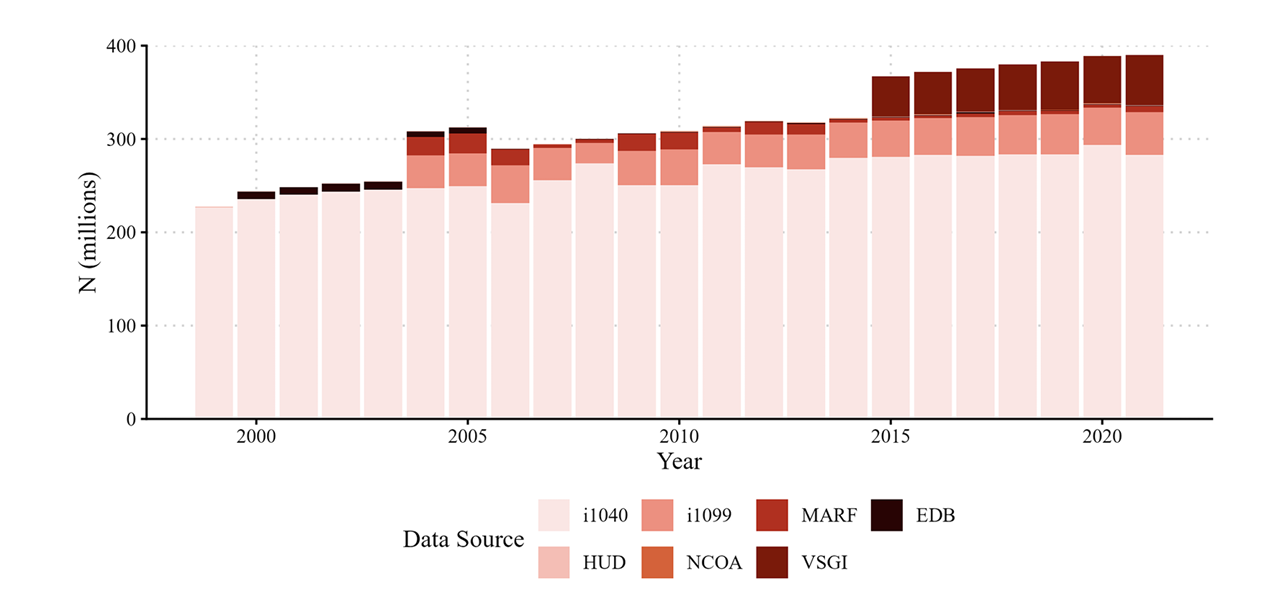
Research in environmental economics often relies on aggregated place-based data, limiting our understanding of the interplay between economic activity and environmental conditions. To mitigate this, we introduce the Census Environmental Impacts Frame (EIF), a new microdata infrastructure linking individual-level socioeconomic data and residential histories with high-resolution estimates of environmental conditions for nearly all US residents over the past 2 decades. The EIF enables researchers to analyze the distribution of environmental conditions using individual-level rather than place-based data, track exposures over time, and assess their economic consequences in unprecedented detail. This article describes the EIF and summarizes opportunities for researchers.
“The Public-Use Gridded Environmental Impacts Frame,” with John Voorheris, Jonathan Colmer, Eva Lyubich, Kendall Houghton, Jennifer Withrow, and Manry Munro; Review of Environmental Economics and Policy, 2026
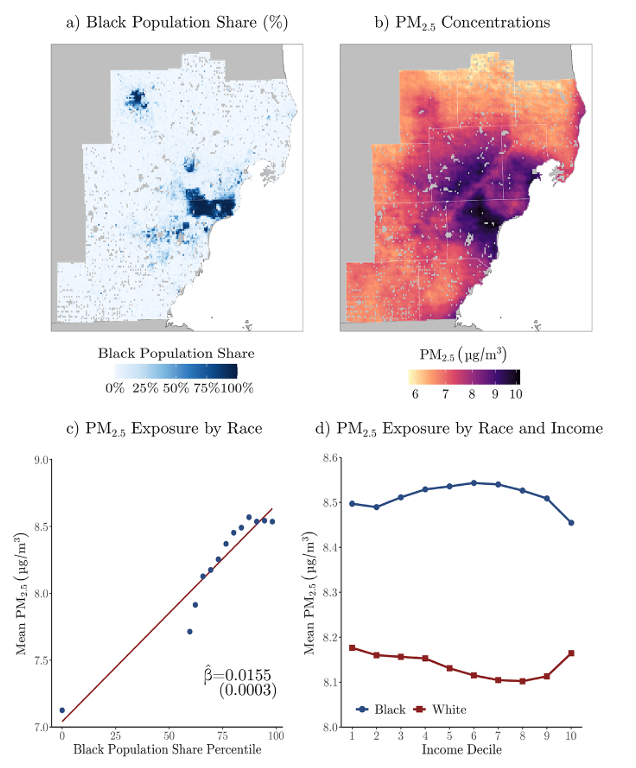
This article introduces the Gridded Environmental Impacts Frame (Gridded EIF), a novel public-use data set derived from the US Census Bureau’s confidential Environmental Impacts Frame (EIF) microdata infrastructure. The EIF combines comprehensive administrative records and survey data on the US population with high-resolution geospatial information on environmental conditions. Although access to the EIF is restricted due to the confidential nature of the underlying data, the Gridded EIF offers a broader research community the opportunity to glean insights from the data and preserve confidentiality. We describe the data and privacy-protection methods and offer guidance on appropriate usage, presenting practical applications.